tank in the city urban war pdf
Understanding Urban Warfare with Tanks: A Comprehensive Guide
Tanks operating within dense urban landscapes face unprecedented tactical and technological hurdles, demanding specialized strategies and equipment for effective deployment.
The introduction of tanks revolutionized land warfare, yet their effectiveness is dramatically altered when confined to urban environments. Historically designed for open battlefield maneuvers, tanks encounter a drastically different set of challenges within the “concrete jungle” – a complex web of streets, buildings, and potential ambush points. This guide delves into the intricacies of employing tanks in urban warfare, examining the historical precedents, modern adaptations, and tactical considerations crucial for success.
Urban terrain negates many of the tank’s traditional advantages, such as long-range firepower and high speed. Conversely, it amplifies vulnerabilities to close-range attacks, improvised explosive devices (IEDs), and anti-tank guided missiles (ATGMs). Successfully integrating tanks into urban operations requires a nuanced understanding of these limitations and a corresponding shift in doctrine, training, and technological development. This exploration will provide a comprehensive overview of navigating this complex domain.
II. Historical Context: Tanks in Urban Environments
Throughout history, tanks have been deployed in urban settings, yielding valuable – and often costly – lessons. Early engagements revealed the difficulties of maneuvering and maintaining situational awareness amidst buildings and rubble. World War II provided brutal examples, notably the battles for Stalingrad and Berlin, where close-quarters combat favored infantry with anti-tank weaponry. These conflicts highlighted the vulnerability of tanks to flanking attacks and the importance of infantry support.
Post-war conflicts, such as Suez, Beirut, and Grozny, further demonstrated these challenges. The Soviet experience in Grozny, in particular, underscored the devastating potential of urban ambushes. More recent conflicts in Iraq, Syria, and Ukraine continue to shape our understanding, revealing the evolving threat landscape and the necessity for adaptive tactics and improved tank designs. Analyzing these historical precedents is crucial for informing modern urban warfare strategies.
A. World War II – Stalingrad & Berlin
The Eastern Front of World War II offered harrowing lessons in urban tank warfare, specifically at Stalingrad and Berlin. Stalingrad, a brutal, building-to-building struggle, saw tanks reduced to supporting infantry in close-quarters engagements, often destroyed by panzerfausts and anti-tank guns hidden amongst the ruins. Mobility was severely restricted, and tanks became vulnerable to coordinated attacks from multiple directions.
Berlin presented similar challenges, though on a larger scale. Soviet forces employed massed tank formations, but progress was slow and costly. The dense urban environment negated many of the tank’s advantages, forcing crews into protracted engagements with determined defenders. These battles demonstrated the critical need for combined arms tactics, close infantry support, and the adaptation of tank doctrine to the unique demands of urban combat. Both cities highlighted the limitations of tanks in constricted spaces.
B. Post-War Conflicts – Suez, Beirut, Grozny
Following WWII, conflicts in Suez, Beirut, and particularly Grozny, further refined understanding of urban tank warfare’s complexities. The Suez Crisis (1956) showed limited tank effectiveness against entrenched positions and improvised explosive devices. Beirut (1982) demonstrated vulnerability to anti-tank guided missiles (ATGMs) employed by urban insurgents, highlighting the need for improved armor and situational awareness.
However, the First Battle of Grozny (1994-95) proved a watershed moment. Russian tanks, deployed without adequate infantry support and facing fierce Chechen resistance utilizing RPGs and ambushes, suffered devastating losses. Grozny exposed the dangers of operating tanks in a labyrinthine urban environment without meticulous planning and close coordination. This conflict underscored the necessity of specialized training, enhanced protection, and a shift towards more cautious, deliberate urban operations.
C. Modern Challenges – Iraq, Syria, Ukraine
Recent conflicts in Iraq, Syria, and Ukraine have presented new and evolving challenges for tank employment in urban settings. In Iraq (2003-2011), tanks faced asymmetric threats including IEDs, RPGs, and sniper fire, necessitating improved armor packages and counter-IED tactics. Syria (2011-present) showcased the effectiveness of ATGMs wielded by rebel forces, inflicting significant casualties on Syrian government tanks.
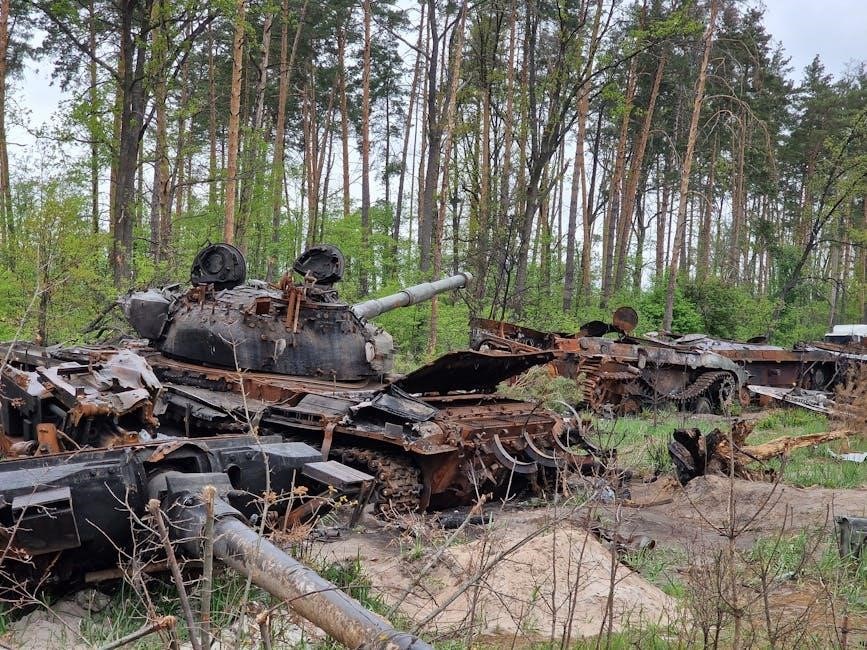
The ongoing conflict in Ukraine (2022-present) has dramatically illustrated the vulnerabilities of tanks in a modern, contested urban environment. Ukrainian forces have effectively utilized drones, anti-tank weapons, and coordinated ambushes to destroy or disable numerous Russian tanks. This conflict emphasizes the critical importance of combined arms tactics, electronic warfare capabilities, and robust infantry support for successful urban tank operations.
III. The Unique Challenges of Urban Tank Operations
Deploying tanks in urban environments introduces a distinct set of operational hurdles not encountered in open terrain. These challenges significantly impact tank effectiveness and crew survivability. Constricted fields of fire limit the tank’s ability to engage targets at optimal ranges, forcing engagements at closer, more dangerous distances.
Increased vulnerability to ambush is a constant threat, as buildings and rubble provide concealed positions for enemy anti-tank teams. The civilian presence and strict rules of engagement further complicate operations, demanding extreme caution to minimize collateral damage and civilian casualties. Navigating complex street networks, overcoming obstacles, and maintaining situational awareness are also paramount concerns for tank crews operating in urban warfare.
A. Constricted Fields of Fire
Urban terrain dramatically reduces a tank’s effective range and situational awareness due to severely limited lines of sight. Buildings, debris, and narrow streets create “kill zones” where tanks are vulnerable to attack from multiple directions. This constriction forces tank gunners to engage targets at extremely close ranges, diminishing their tactical advantage and increasing the risk of reciprocal fire.
The inability to traverse and elevate the main gun freely further restricts engagement options. Tanks often find themselves unable to bring their full firepower to bear, requiring complex maneuvering to acquire and engage targets. Effective fire control becomes significantly more challenging, demanding precise coordination and reliance on advanced sensors to overcome these limitations. This necessitates a shift towards more deliberate and cautious engagement tactics.
B. Increased Vulnerability to Ambush
The complex and cluttered nature of urban environments provides ideal conditions for ambushes against tanks. Buildings offer concealed positions for anti-tank guided missiles (ATGMs), rocket-propelled grenades (RPGs), and infantry armed with explosive devices. Narrow streets and alleyways funnel tanks into predictable routes, making them easy targets. The element of surprise is significantly enhanced for the attacker, while the tank crew’s ability to detect and react is severely hampered.
Vertical threats, such as rooftop positions, are particularly dangerous and difficult to counter. Tanks are vulnerable to attacks from above, where their armor is typically weakest. Effective counter-ambush tactics require constant vigilance, thorough reconnaissance, and the deployment of dismounted infantry to clear potential ambush sites. Situational awareness and rapid response are crucial for survival.
C. Civilian Presence & Rules of Engagement
Urban warfare inherently involves operating in close proximity to civilian populations, significantly complicating tank operations. Strict adherence to the laws of war and rules of engagement (ROE) is paramount, demanding extreme caution to avoid collateral damage and civilian casualties. Identifying and distinguishing between combatants and non-combatants becomes exceptionally challenging amidst the chaos of urban combat.
The risk of unintended harm necessitates precise targeting, careful fire control, and a thorough assessment of the surrounding environment before engaging any target. Tanks must avoid damaging essential infrastructure like hospitals, schools, and religious sites. ROE often restrict the use of firepower in densely populated areas, forcing crews to rely on alternative tactics and potentially increasing their vulnerability. Maintaining positive identification is critical, and any doubt must favor civilian protection.
IV. Tank Design Adaptations for Urban Warfare
Traditional tank designs are often ill-suited for the complexities of urban environments, prompting significant adaptations. Reactive armor and Active Protection Systems (APS) are crucial for mitigating the threat of close-range anti-tank weapons, prevalent in city fighting. Enhanced situational awareness is achieved through advanced sensor suites, including high-resolution cameras providing 360-degree coverage, and improved thermal imaging for detecting threats in obscured conditions.
Integrating non-lethal weaponry, such as smoke launchers and acoustic hailing devices, allows crews to control crowds and de-escalate situations without resorting to lethal force. Lower profiles and improved maneuverability are also sought, though often constrained by the tank’s inherent size. Strengthened underbelly protection is vital to counter improvised explosive devices (IEDs). These modifications aim to increase survivability and operational effectiveness within the urban battlefield.
A. Reactive Armor & Active Protection Systems (APS)
Reactive armor (ERA) remains a cornerstone of tank protection, utilizing explosive charges to disrupt the penetration of shaped charges and kinetic energy projectiles. However, ERA’s effectiveness is diminished in close-quarters urban combat due to ricochet effects and collateral damage concerns. Active Protection Systems (APS) represent a paradigm shift, actively detecting and intercepting incoming threats before they impact the tank.
Hard-kill APS employ physical countermeasures, like interceptor projectiles, while soft-kill APS disrupt the guidance systems of incoming missiles. Modern APS are becoming increasingly sophisticated, capable of handling multiple simultaneous threats and discriminating between enemy projectiles and civilian objects. Integrating both ERA and APS provides a layered defense, maximizing survivability against a diverse range of urban threats, though weight and power requirements pose significant engineering challenges.
B. Enhanced Situational Awareness – Sensors & Cameras
Urban environments severely restrict visibility, demanding advanced sensor suites for tank crews. Traditional periscopes are insufficient; modern tanks integrate 360-degree panoramic cameras, providing continuous situational awareness, even when buttoned down. Thermal imaging and low-light cameras are crucial for detecting threats concealed within buildings or during nighttime operations.
Lidar (Light Detection and Ranging) systems create detailed 3D maps of the surroundings, identifying potential obstacles and enemy positions. Acoustic sensors can detect the sound of gunfire or approaching infantry, alerting the crew to potential ambushes. Data fusion, combining inputs from multiple sensors, presents a comprehensive operational picture to the commander and gunner. Improved sensor integration is vital for minimizing blind spots and maximizing reaction time in the complex urban terrain.
C. Non-Lethal Weaponry Integration
Minimizing collateral damage and civilian casualties is paramount in urban warfare, necessitating the integration of non-lethal weaponry onto tank platforms. Obscurants, such as smoke grenades or aerosol screens, can temporarily disrupt enemy vision and provide cover for maneuvering. Acoustic hailing devices allow crews to issue warnings or instructions to civilians, potentially de-escalating tense situations.
Less-lethal munitions, like rubber bullets or beanbag rounds, offer a means of engaging threats without causing fatal injuries. Directed energy weapons, such as dazzlers, can temporarily incapacitate individuals without lasting harm. However, the effectiveness and ethical considerations of these systems are debated. Careful consideration must be given to the rules of engagement and the potential for unintended consequences when employing non-lethal options in a complex urban setting.
V. Tactical Considerations: Deploying Tanks in Cities
Successful tank deployment in urban environments hinges on meticulous planning and adaptable tactics. Route selection must prioritize wide avenues, avoiding narrow streets and potential ambush points. Pre-mission reconnaissance, utilizing drones and other sensors, is crucial for identifying obstacles and enemy positions. Breaching obstacles – rubble, barricades, or vehicles – requires specialized equipment and coordinated effort.
Maintaining situational awareness is paramount; crews must constantly scan for threats from rooftops, windows, and basements. Layered defenses, incorporating infantry support and close air support, are essential for protecting tanks from anti-tank guided missiles (ATGMs) and RPGs. Communication protocols must be robust and redundant, ensuring seamless coordination between tank crews, infantry units, and command elements; Flexibility is key, as urban battles are inherently dynamic and unpredictable.
A. Route Planning & Obstacle Negotiation
Detailed route planning is the cornerstone of urban tank operations, prioritizing avenues offering maximum maneuverability and minimizing exposure to enemy fire. Analyzing infrastructure – bridge weight limits, building integrity, and underground utilities – is critical to avoid immobilization or collateral damage. Identifying potential ambush sites, such as alleyways, intersections, and elevated positions, allows for proactive countermeasure implementation.
Obstacle negotiation demands specialized equipment and techniques. Bulldozers and breaching charges can clear rubble and barricades, while mine rollers and route clearance vehicles mitigate the threat of improvised explosive devices (IEDs). Tank crews must be trained in rapid obstacle assessment and bypass techniques. Coordinating with engineers is vital for complex breaching operations. Alternative routes should always be identified in case of blockages or enemy resistance.
B. Building Clearing Support – Direct & Indirect Fire
Tanks provide crucial fire support during building clearing operations, though direct engagement requires careful consideration to minimize collateral damage. Precise gunnery, utilizing stabilized main guns and advanced fire control systems, is essential for targeting enemy positions within structures. Indirect fire, employing high-explosive rounds, can suppress enemy activity and create breaches, but necessitates accurate spotting and adherence to rules of engagement.
Coordinating with infantry is paramount; tanks should not operate independently during building clearing. Infantry identifies and marks enemy locations, while tanks provide overwatch and suppressive fire. Utilizing smoke screens can obscure enemy lines of sight and provide cover for advancing troops. Close-range engagements demand heightened situational awareness and rapid target acquisition. Post-blast assessment is crucial to identify any structural instability.
C. Coordination with Infantry & Other Assets
Effective tank operations in urban environments hinge on seamless coordination with infantry and supporting elements. Close communication, utilizing secure radio networks and shared situational awareness platforms, is vital for preventing fratricide and maximizing combat effectiveness. Infantry provides essential reconnaissance, identifying enemy positions and potential ambushes that tanks may not detect. Engineers clear obstacles and create routes for tank maneuverability, while forward observers direct artillery fire to support tank advances.
Air support, including close air support (CAS) and reconnaissance drones, enhances situational awareness and provides additional firepower. Medical evacuation plans must be established to rapidly extract casualties from the battlefield. Logistics support is critical for resupplying tanks with ammunition and fuel. Joint fire support teams integrate all available assets to create a synergistic effect, ensuring a coordinated and decisive response.
VI. The Role of Tank Crews in Urban Combat
Tank crews in urban warfare face immense pressure and require specialized training to operate effectively. Each crew member – driver, gunner, commander, and loader – plays a critical role in the tank’s survival and combat capability. The driver and navigator must expertly maneuver through constricted streets and navigate complex urban terrain, avoiding obstacles and potential IEDs. The gunner requires precision and rapid target acquisition skills, engaging threats quickly and accurately.
The commander is responsible for overall situational awareness, coordinating with infantry, and making critical decisions under stress. Effective communication within the crew is paramount, ensuring seamless information flow and coordinated action. Maintaining calm and adhering to strict rules of engagement are vital to minimize civilian casualties. Constant vigilance and proactive threat assessment are essential for survival in the unforgiving urban battlefield.
A. Driver & Navigator – Navigating Complex Terrain
The driver and navigator form a crucial partnership within the urban environment, demanding exceptional skill and coordination. Navigating city streets presents unique challenges – rubble-strewn roads, narrow alleyways, and unexpected obstacles like abandoned vehicles or barricades. Precise maneuvering is paramount, avoiding collisions with buildings and civilian infrastructure. The navigator utilizes maps, GPS, and visual observation to guide the driver, accounting for limited visibility and potential dead zones.
Effective communication is vital, relaying clear and concise instructions amidst the chaos of combat. Anticipating potential threats, such as ambushes from rooftops or basements, is essential for proactive route planning. Understanding the tank’s limitations – turning radius, ground clearance – is critical for avoiding immobilization. Maintaining situational awareness of surrounding buildings and pedestrian traffic minimizes collateral damage and civilian casualties.
B. Gunner & Commander – Target Acquisition & Engagement
The gunner and commander represent the tank’s offensive core, responsible for identifying, prioritizing, and engaging targets within the complex urban battlefield. Target acquisition is significantly hampered by obstructed views and the presence of civilians, demanding meticulous observation and positive identification. The commander scans the environment, utilizing sensors and crew reports to build a comprehensive understanding of the tactical situation. Precise target designation to the gunner is crucial, minimizing the risk of friendly fire or collateral damage.
Engagement decisions must adhere strictly to the rules of engagement, considering the proximity of non-combatants and the potential for structural damage. The gunner employs a range of ammunition types, selecting the most appropriate option for each target – from high-explosive rounds for fortifications to armor-piercing rounds for enemy vehicles. Rapid and accurate fire control is essential, capitalizing on fleeting opportunities and neutralizing threats quickly.
C. Communication & Teamwork – Maintaining Situational Awareness
Effective communication and seamless teamwork are paramount for tank crews operating in the chaotic urban environment. Maintaining situational awareness requires constant information sharing between crew members, as well as with supporting infantry and command elements. Clear and concise radio transmissions are vital, relaying critical intelligence about enemy positions, civilian movements, and potential hazards. Internal communication systems must be reliable, allowing the commander to direct the gunner and driver with precision.
Crew coordination extends beyond verbal commands; anticipating each other’s needs and reacting instinctively to changing circumstances is crucial. Regular briefings and debriefings help to refine tactics and address emerging challenges. Shared situational understanding minimizes the risk of misidentification, friendly fire, and tactical errors. A cohesive crew functions as a single, integrated unit, maximizing the tank’s combat effectiveness in the unforgiving urban landscape.
VII. Analyzing Case Studies: Lessons Learned from Recent Conflicts
Recent conflicts offer invaluable lessons regarding tank employment in urban settings. The Battle of Grozny highlighted the devastating consequences of employing tanks without adequate infantry support and reconnaissance, resulting in significant losses. Mosul, Iraq demonstrated the effectiveness of combined arms operations, where tanks provided crucial fire support to dislodged ISIS fighters, but only when closely coordinated with infantry clearing operations.
The conflict in Kyiv, Ukraine underscored the vulnerability of tanks to modern anti-tank weaponry, particularly drones and ambushes in constricted urban spaces. These case studies reveal the critical need for enhanced situational awareness, reactive armor, and robust communication systems. Analyzing these engagements emphasizes the importance of adapting tactics to the specific urban environment and prioritizing crew survivability. Ultimately, successful urban tank operations depend on meticulous planning, effective coordination, and a realistic assessment of the risks involved.
A. The Battle of Grozny – A Cautionary Tale
The First Battle of Grozny (1994-1995) stands as a stark warning regarding the misuse of armored vehicles in complex urban terrain. Russian forces launched a poorly planned offensive, deploying tanks and infantry without sufficient reconnaissance or coordinated support. Chechen fighters exploited the constricted streets and multi-story buildings, employing anti-tank guided missiles (ATGMs) and RPGs from prepared ambush positions.
The result was catastrophic; numerous tanks were destroyed or disabled, often becoming “steel coffins” for their crews. Lack of communication and insufficient infantry protection left tanks isolated and vulnerable. Grozny demonstrated that urban warfare negates many of the tank’s traditional advantages – firepower and armor – while amplifying its weaknesses. This battle highlighted the necessity for close-quarters combat training, enhanced situational awareness, and a shift towards combined arms tactics prioritizing infantry dominance in urban environments.
B. Mosul, Iraq – Combined Arms Operations
The 2016-2017 Battle of Mosul showcased a more effective, albeit still challenging, application of tanks in an urban setting. Iraqi Security Forces, supported by the US-led coalition, employed a combined arms approach, integrating tanks with infantry, engineers, and air support. M1 Abrams tanks provided crucial firepower, breaching defenses and suppressing enemy positions, but operated cautiously, often providing overwatch rather than leading assaults.
Engineers played a vital role, clearing routes and creating breaches for tank maneuverability. Close coordination with infantry was paramount, with soldiers clearing buildings and providing security while tanks offered fire support. Lessons learned from previous conflicts were applied, emphasizing the importance of situational awareness, minimizing exposure, and utilizing precision munitions to reduce collateral damage. Mosul demonstrated that tanks can be effective in urban warfare when integrated into a well-planned and executed combined arms strategy.
C. Kyiv, Ukraine – Urban Defense & Tank Losses
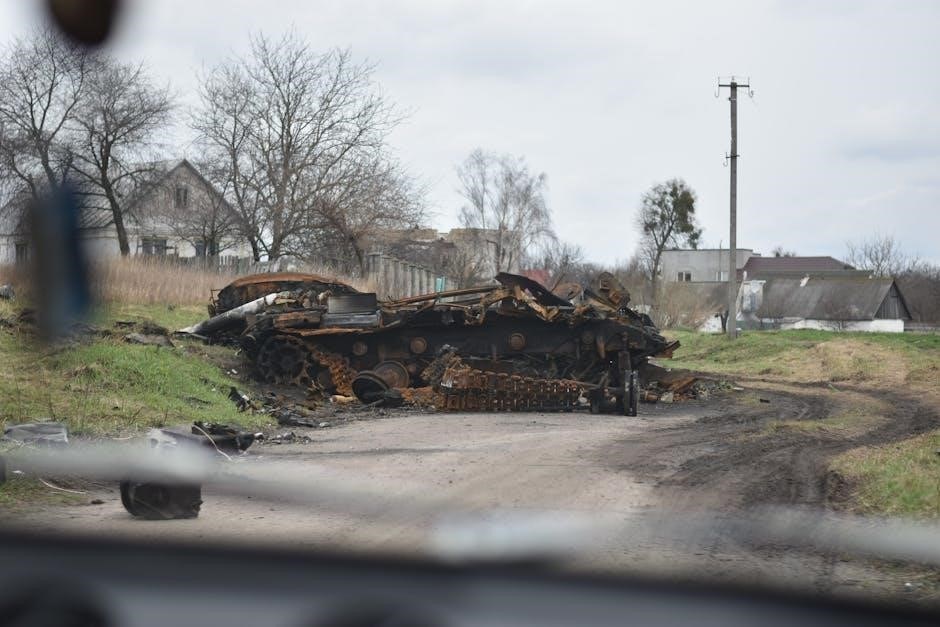
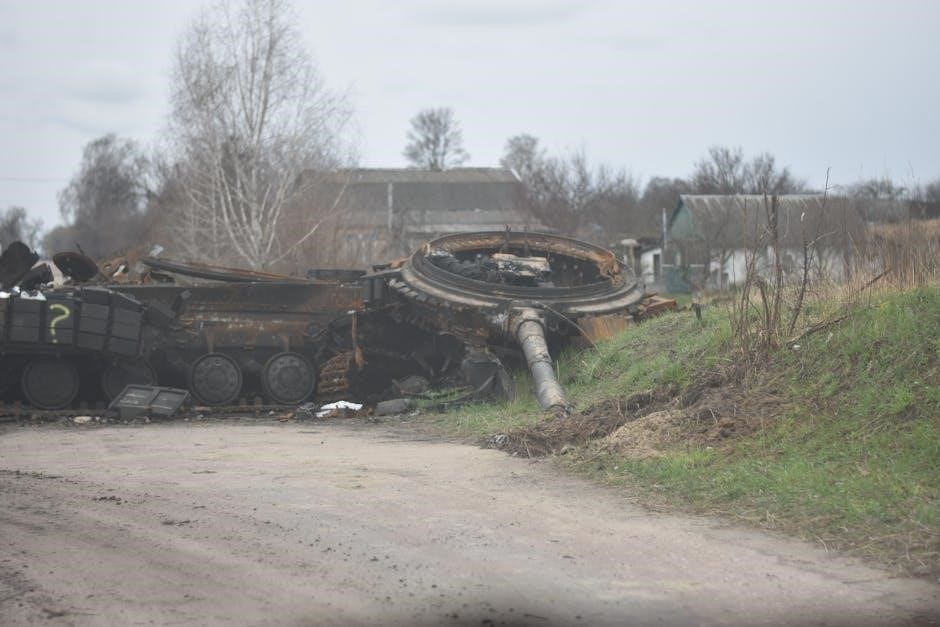
The 2022 Russian invasion of Ukraine, particularly the initial assault on Kyiv, highlighted the vulnerabilities of tanks in a modern urban defense. Ukrainian forces effectively utilized anti-tank guided missiles (ATGMs), drones, and improvised explosive devices (IEDs) to inflict significant losses on Russian armor. Narrow streets, rubble-strewn avenues, and the presence of civilian infrastructure created kill zones, negating the tank’s mobility and firepower advantages.
Numerous videos documented destroyed or abandoned Russian tanks, illustrating the effectiveness of asymmetric warfare tactics. Ukrainian defenders demonstrated a sophisticated understanding of urban warfare principles, exploiting the terrain and employing ambushes. Kyiv’s defense underscored the importance of distributed anti-tank capabilities and the limitations of relying solely on armored vehicles in densely populated areas. The conflict served as a stark reminder of the evolving nature of urban combat and the need for adaptable tank tactics.
VIII. Future Trends: The Evolving Role of Tanks in Urban Warfare
The future of tanks in urban environments hinges on technological advancements and doctrinal shifts. Autonomous systems and remote operation are poised to reduce crew risk and enhance situational awareness, allowing for safer navigation of complex cityscapes. Drone integration will provide crucial overwatch, target identification, and reconnaissance capabilities, mitigating the constricted fields of fire.
Specialized urban tank platforms, potentially lighter and more agile, equipped with advanced sensors and non-lethal weaponry, are under development. Artificial intelligence will play a key role in threat detection and decision-making; Networked warfare, linking tanks with infantry and other assets, will be essential for coordinated operations. Ultimately, the tank’s role will likely evolve towards providing precision fire support and acting as a mobile, protected sensor platform, rather than leading the charge.
A. Autonomous Systems & Remote Operation
Integrating autonomous capabilities into urban tank operations promises to revolutionize battlefield tactics. Remote operation allows crews to safely control tanks from secure locations, minimizing risk in close-quarters combat. Advanced sensors and AI-driven navigation systems enable tanks to traverse complex urban terrain with reduced reliance on direct human control.
Partial autonomy, assisting drivers with obstacle avoidance and route planning, is a near-term possibility. Full autonomy, while further off, could allow tanks to operate independently in pre-defined zones, providing continuous surveillance or fire support. However, ethical considerations and the potential for system failures necessitate robust safeguards and human oversight. Successful implementation requires secure communication links and reliable algorithms capable of handling unpredictable urban environments.

B. Integration with Drone Technology
Synergizing tank operations with drone technology dramatically enhances situational awareness and combat effectiveness in urban settings. Small, unmanned aerial vehicles (UAVs) can scout ahead, identifying enemy positions, potential ambushes, and civilian presence beyond the tank’s direct line of sight. Real-time video feeds from drones provide commanders and gunners with crucial intelligence, improving target acquisition and reducing collateral damage.
Loitering munitions, guided by tank crews or operating autonomously, can engage targets identified by drones, offering precision strikes in confined spaces. Drone swarms could overwhelm enemy defenses or provide comprehensive surveillance of entire city blocks. However, maintaining secure communication links and mitigating the risk of drone jamming or interception are critical challenges. Effective integration demands seamless data sharing and robust counter-drone capabilities.
C. Development of Specialized Urban Tank Platforms
Addressing the unique demands of urban warfare necessitates the development of tank platforms specifically engineered for the concrete jungle. These designs prioritize maneuverability, survivability, and non-lethal engagement capabilities. Reduced tank size and weight are crucial for navigating narrow streets and supporting infrastructure. Enhanced armor protection, focusing on mitigating RPG and anti-tank missile threats from close range, is paramount.
Modular armor packages allow for rapid adaptation to varying threat levels. Integration of advanced sensors, including 360-degree cameras and LIDAR, provides superior situational awareness. Non-lethal weaponry, such as acoustic hailing devices and smoke launchers, minimizes civilian casualties. Ultimately, specialized urban tank platforms represent a significant investment in adapting armored warfare to the complexities of the modern urban battlefield.